
The Pull of Isolation
Crime and PunishmentRaskolnikov withdraws from ordinary relationships, briefly reaches toward assistance, and then returns to solitude as his crisis narrows his world.
increasing Bearing strength in each event
 decreasing
Bearing strength in each eventdecreasingAvoiding the Landlady
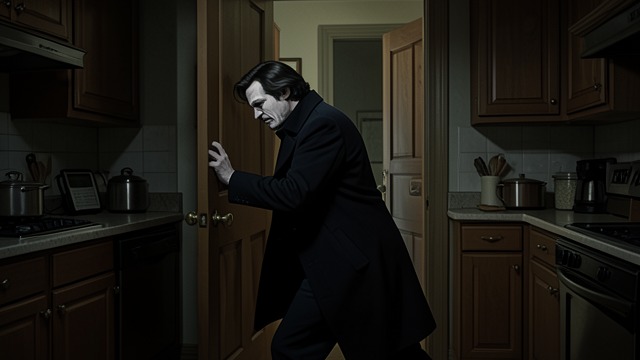
Avoiding the Landlady
A Life of Evasion
Raskolnikov slips past his landlady’s kitchen to avoid questions about his unpaid debt. He is less frightened of punishment than of having to listen, answer, and invent excuses.
His avoidance has expanded beyond one creditor: he dreads meeting almost anyone. Social contact has become another pressure from which he tries to escape.
A Tavern Confession Heard
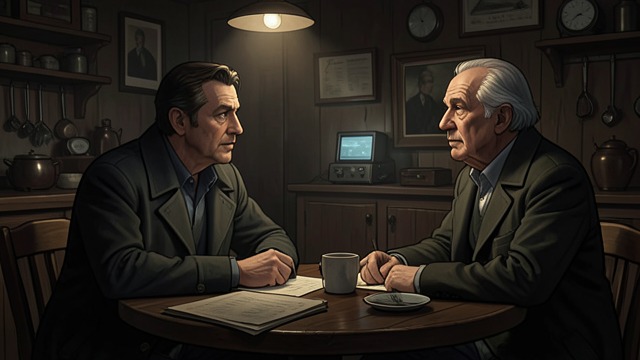
A Tavern Confession Heard
An Unwanted Conversation
Raskolnikov enters a tavern seeking relief from thirst and weakness. Semyon Zaharovitch Marmeladov begins speaking to him with an intimacy that contrasts with Raskolnikov’s habitual aversion to strangers.
Raskolnikov listens closely despite feeling vexed by the encounter. For a brief period, another person’s story crosses the boundary of his self-enclosure.
Remembering Razumihin
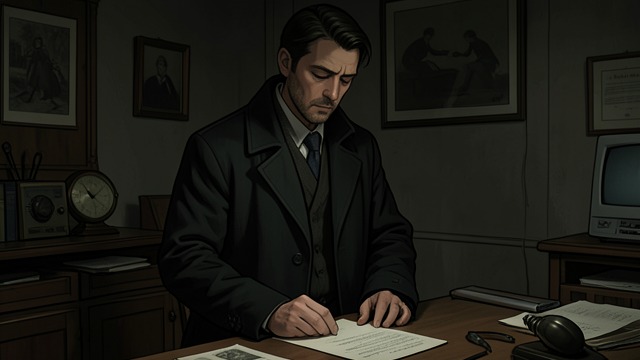
Remembering Razumihin
A Possible Connection
After reading the letter, Raskolnikov recalls his former university companion Razumihin, a resourceful and generous man. He considers visiting him to ask for work or practical help.
The possibility is short-lived. Raskolnikov dismisses the idea because ordinary employment cannot meet the need he now imagines, and he suspects a hidden significance in his own impulse to seek a friend.
The Dream’s Return
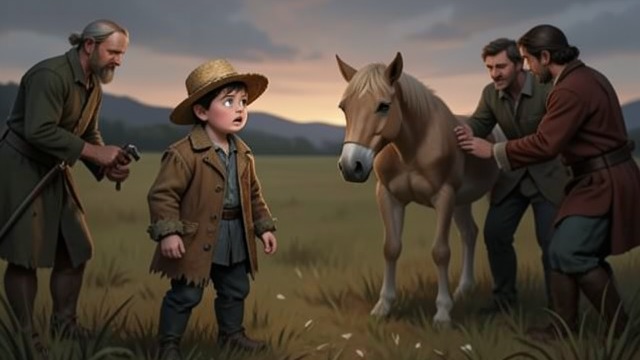
The Dream’s Return
Childhood Recalled
Alone after drinking and falling asleep outdoors, Raskolnikov dreams of childhood and the killing of a helpless mare. In the dream, he cannot accept the adults’ insistence that the violence is merely drunken foolishness.
The scene restores an emotional response he has tried to override with reasoning. For a moment, the memory breaks through the isolation of his private theory and makes suffering impossible to treat as an abstraction.
Return to the Garret
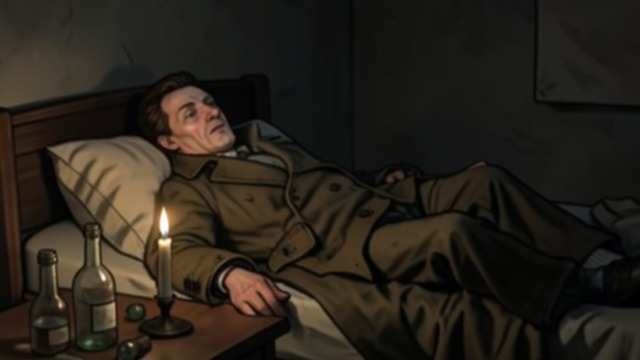
Return to the Garret
Solitude After Violence
Raskolnikov returns to his garret after evading the people who discover the crime. He has avoided immediate detection, but his room offers no human support or clear refuge.
He collapses into blank forgetfulness, with disconnected thoughts moving through his mind. The concealment of his act leaves him more isolated, not more secure.
Early July, before the first pawnshop visit
The first evening, after the pawnshop visit
The day after he reads his mother’s letter
The night before the murders, on Petrovsky Island
Late on the evening of the murders
